
+++ Alaska TV +++ »Alaskas Bären« (“Alaska's Bears”)
Brown bears, black bears and polar bears – Alaska's wilderness has them all. To get an authentic picture of their lives, ecologist and conservationist Chris Morgan travels 5,000 kilometers (3,100 miles) through the largest, northernmost and westernmost state of the United States.

Part 1/3 | »Ein Sommer unter Grizzlys« (“A Summer Among Grizzlies”)
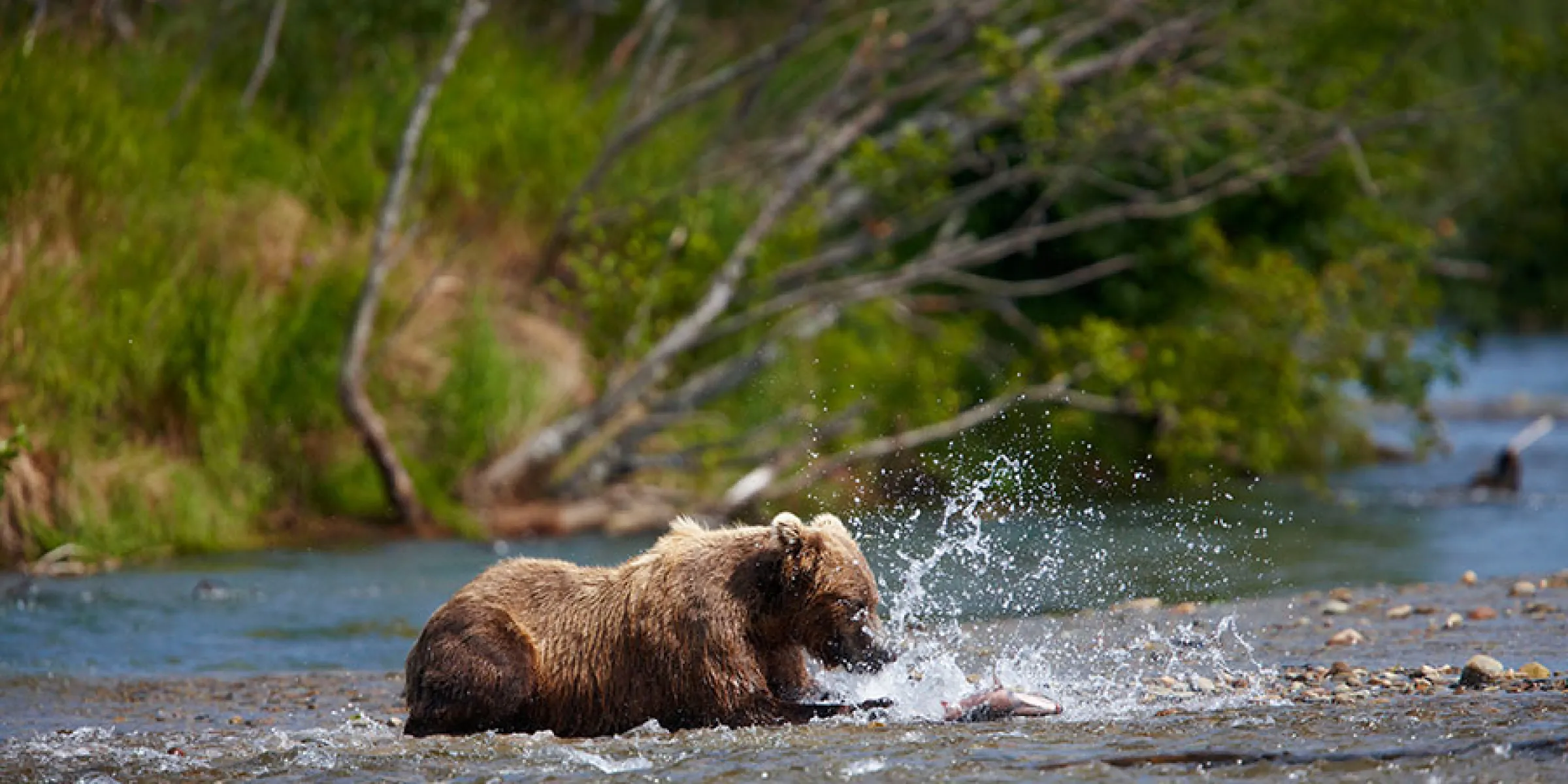
In the almost untouched coastal landscape of the Alaska Peninsula, he comes across an extraordinary grizzly community. Nowhere else do so many brown bears live together in such a small space. Mother bear Nadie leads her two cubs, born in spring, through the lush sedge meadows. Lots of new impressions for the grizzly cubs: the blades of grass, the scents, the many other bears. During mating season, the family has to make its way through the dangerous battle zone of the rivals. In July, the river slowly fills with salmon heading inland to their spawning grounds. For the grizzlies it's a time of plenty, but also of conflict. There are fights over the best fishing spots. Only determined animals like Nadie get their fill. The experienced mother often holds her own against males twice her size. The three bears will make it through the long winter months in their den just fine.
Air date: Dienstag 2. Februar um 14.15 Uhr im Bayrischen Fernsehn (BR)

Part 2/3 | »Zwischen Anchorage und dem Polarmeer« (“Between Anchorage and the Arctic Ocean”)
In Anchorage, Alaska's capital, the line between wilderness and civilization is blurred. As if it were the most natural thing in the world, a black bear family wanders from the forest across the golf course into the gardens of residential neighborhoods. In "their" territory, it makes no difference to the two cubs whether they climb a tree or a fence. In the huge Denali National Park, some 240 kilometers (150 miles) north of Anchorage, winter is casting its shadow ahead. Wolves lie in wait for the little Arctic ground squirrels, which are busy packing on a good layer of fat in their burrows for the cold months. The Toklat grizzlies, too, now have only one thing on their minds: berries. Unlike their relatives on the coast, the brown bears of Alaska's interior have to get by without rich salmon meals. The way toward the Arctic Ocean leads through spectacular landscapes, with musk oxen grazing right by the roadside. Several hundred kilometers further along the dead-straight Dalton Highway, the pale lights of Prudhoe Bay, the oil town at the end of the North American continent, suddenly appear. And soon the first polar bears, too.
Air date: Mittwoch 3. Februar um 14.15 Uhr im Bayerischen Fernsehn (BR)

Part 3/3 | »Wanderer der Arktis« (“Wanderers of the Arctic”)
Every fall, numerous polar bears come to Barter Island on Alaska's Arctic coast. Between November and January, pregnant females give birth to their cubs here in snow dens. Leftovers from whaling attract mothers with hungry young. The longer winter takes to arrive, the fiercer the competition among the white bears for the last nourishing bites. Only once the ocean has frozen over can they set out to lie in wait for their favorite prey far out on the pack ice: seals. But because the ice is becoming ever more fragile and starts melting earlier, the hunting season for the Arctic's largest predators gets shorter from year to year. In the untouched wilderness of the Brooks Range, huge caribou herds migrate to their summer pastures. Wolves and the odd brown bear follow them. At a river high up in the mountains, Chris Morgan comes across salmon. Shortly afterwards, a grizzly mother appears with her young. Patiently, she teaches her three cubs the art of fishing. It is their last summer together.
Air date: Donnerstag 4. Februar um 14.15 Uhr im Bayerischen Fernsehn (BR)