
+++ Alaska TV +++ »Expeditionen ins Tierreich - Nordalaska« on NDR
Northern Alaska, with its empty expanses and largely inaccessible wilderness, is like almost no other place on Earth. Tourists flock to Denali National Park to marvel at North America's highest mountain, Denali, formerly Mount McKinley. In most other regions, visitors face real challenges: no roads, no hiking trails and no shelters. The wildlife has adapted perfectly to the Arctic conditions. The documentary »Expeditionen ins Tierreich« (Expeditions into the Animal Kingdom) takes you on a journey to huge caribou herds, grizzlies and Arctic ground squirrels.

Gates of the Arctic National Park lies in the mountains of the Brooks Range – no houses, no roads, not even hiking trails. Barely 1,000 visitors find their way here each year. Most tourists instead head to Denali National Park to see North America's highest mountain, Mount McKinley, or to Brooks Falls, where huge grizzlies fish for salmon. As spectacular as that may seem, the feeling of being out in the wilderness tends to get lost along the way.
It's a completely different story in Gates of the Arctic National Park: 34,287 square kilometers (about 13,240 square miles) of trackless, untouched wilderness far from any civilization. Here, huge caribou herds migrate thousands of kilometers to their grazing grounds, crossing icy rivers with their calves. Muskoxen endure both the Arctic cold and the invasion of mosquitoes. And Arctic ground squirrels and wood frogs even let themselves almost "freeze" during hibernation.
For the few visitors who come, Gates of the Arctic National Park is a paradise – not just for nature lovers but for mountaineers too, since the granite towers and sheer walls of the Arrigetch Peaks are a real challenge.
The park is part of a chain of protected areas: to the north, it opens onto a gigantic plain that stretches all the way to Alaska's Arctic coast. There, polar bears spend the summer waiting for the Arctic Ocean to freeze over. To the west lies Kobuk Valley National Park with its unique Arctic sand dunes. And bands of Dall sheep roam along the rugged ridges of the Brooks Range.
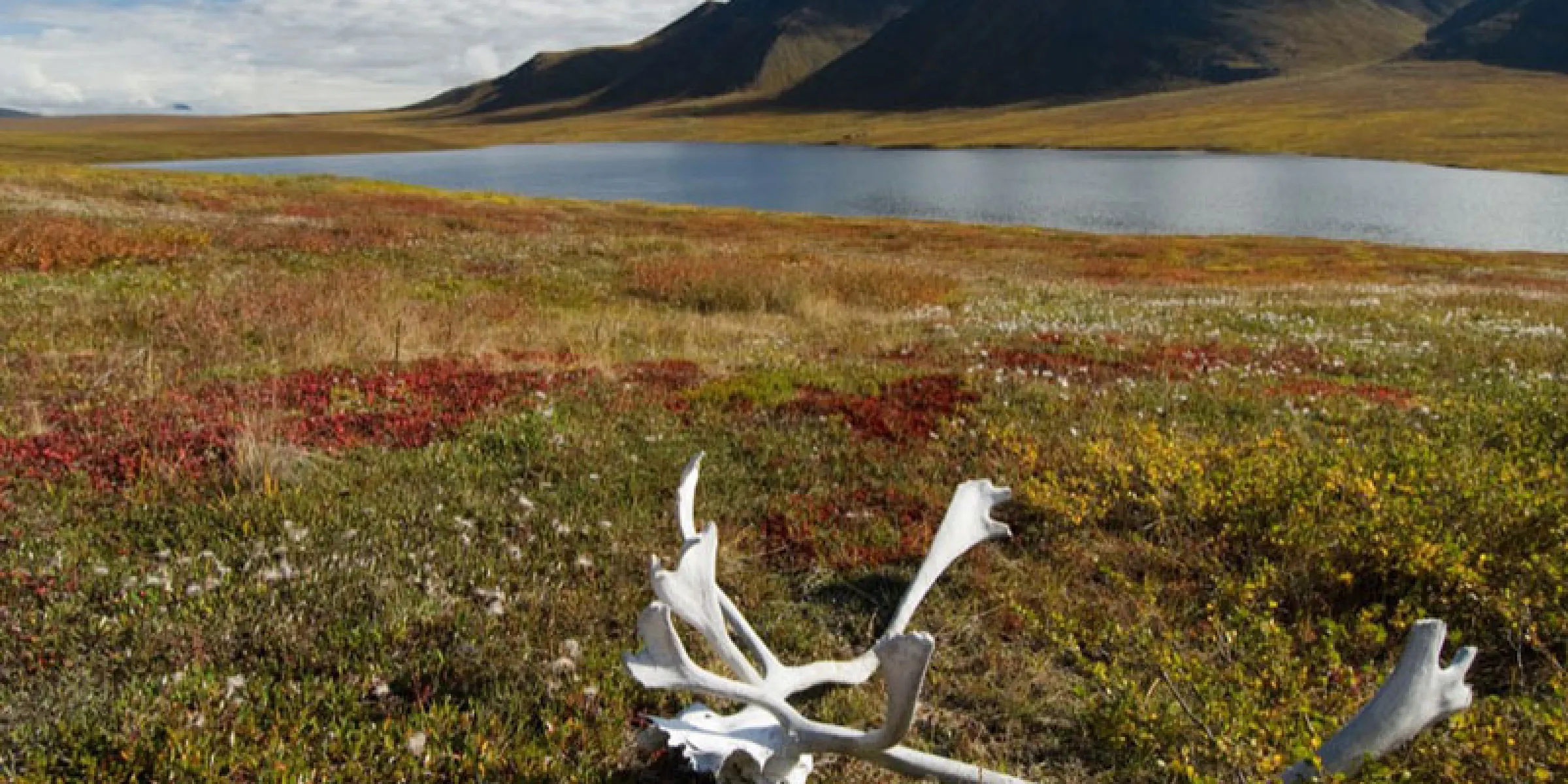
The huge caribou herds pass through this region. The Western Arctic Herd, with around 300,000 animals, is the largest. It prefers the plains north of the Brooks Range, known as the North Slope. On their annual migrations, the caribou not only cross the Brooks Range but also ford countless raging tundra rivers with their young.
No roads, no hiking trails and no shelters – these conditions don't exactly make it easy for visitors to explore Gates of the Arctic National Park. It's a world that exists largely without people, a protected area purely for its own sake. Grizzlies live here more undisturbed than anywhere else. Food, however, is scarce and widely scattered. The bears are constantly searching and roam enormous territories. Only in a few places do some of them gather in late summer to catch salmon. But far from the sea, there are far fewer fish than at Brooks Falls in southern Alaska. And since salmon stop eating before they spawn, they are nowhere near as fat by the time they reach Alaska's interior.
The climate in northern Alaska is extreme. Winter is long and bitterly cold. During this time, everything seems dead. Only the northern lights paint incredible shapes across the night sky. Many animals leave the area for the winter. Those that stay need very special adaptations to survive. Arctic ground squirrels have mastered this brilliantly: they save energy by lowering their body temperature below freezing during hibernation – unique among mammals!
Airing: Wednesday, February 24, at 20.15 on NDR
Source: www.nrd.de