
On the Trail of the Grizzly in Alaska with the BBC's Wildlife Guides (10 days)
Taking photos and filming with pros, bears in Alaska's wilderness, expert guides at your side – the perfect combination for you? Then join in: for the very first time, the two experienced BBC photographers and guides Buck Wilde and Kent Fredrikson are offering a ten-day photo workshop, including camp, for amateur nature and wildlife photographers. And at what is probably the most famous grizzly photo location of all: Hallo Bay in Katmai National Park.
Description
Together, your two guides bring more than 50 years of camp experience up close with the grizzly bears of Katmai National Park. They often stay there for several months at a time. No wonder, then, that TV crews from the BBC, as well as Disney Studios, National Geographic and the Discovery Channel, choose these two guides again and again. There's a reason Buck is also called the "bear whisperer".

When does the photo workshop take place?
September is the best time for documentaries. The summer tourists have left by then, and Katmai National Park shows its truly wild side. Chances are excellent that you'll share Hallo Bay only with your group, the bears, perhaps wolves and certainly bald eagles.
Where in Katmai National Park will we be taking photos?
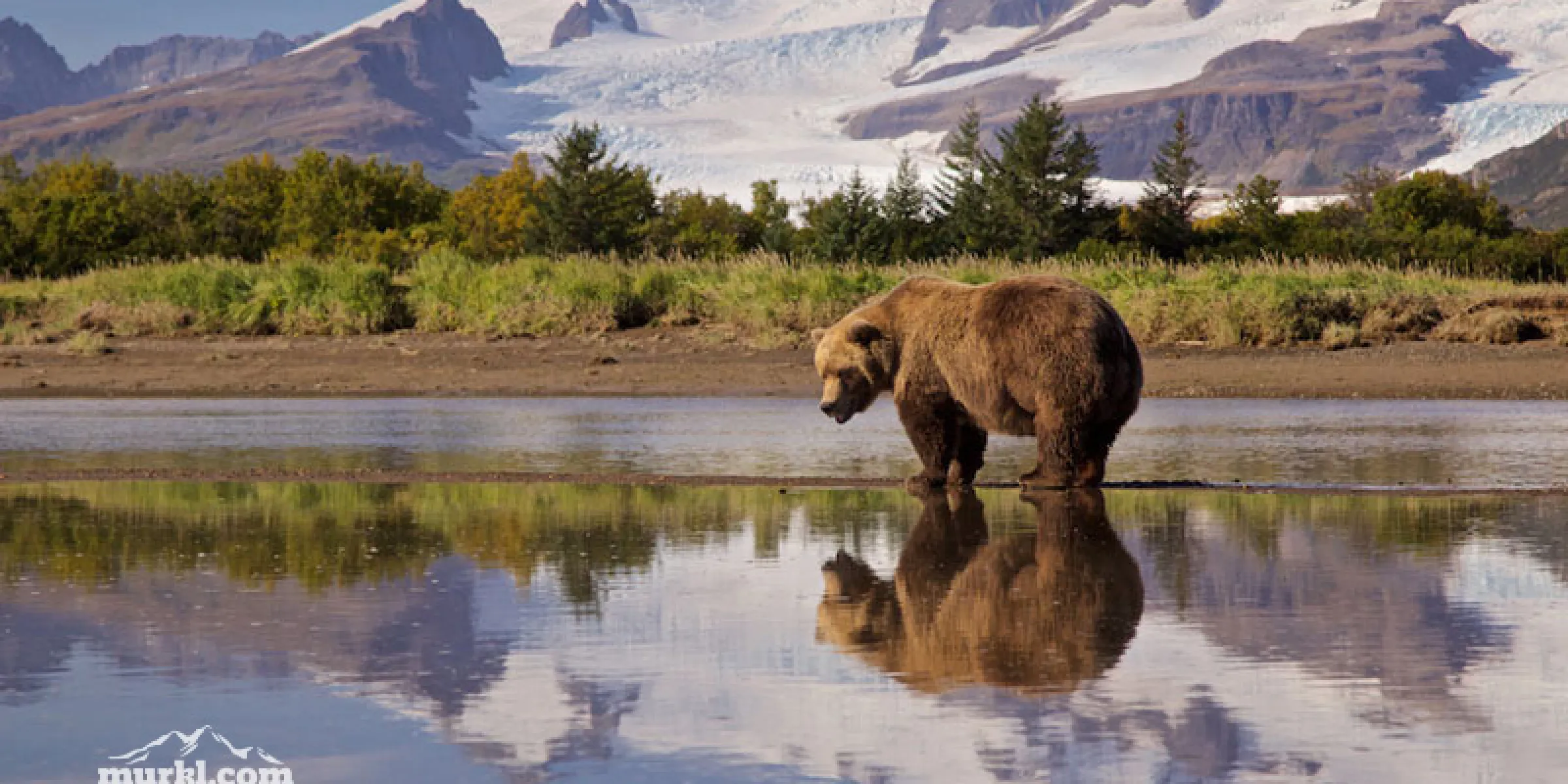
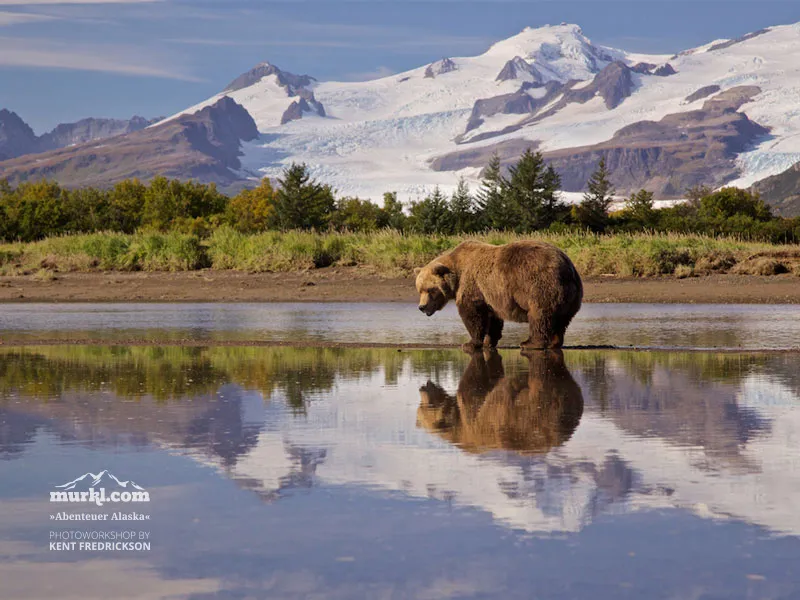
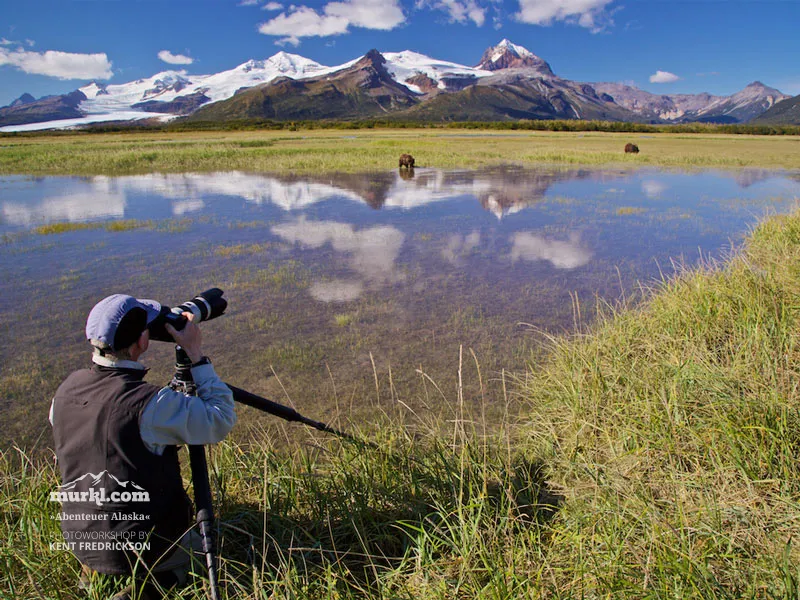
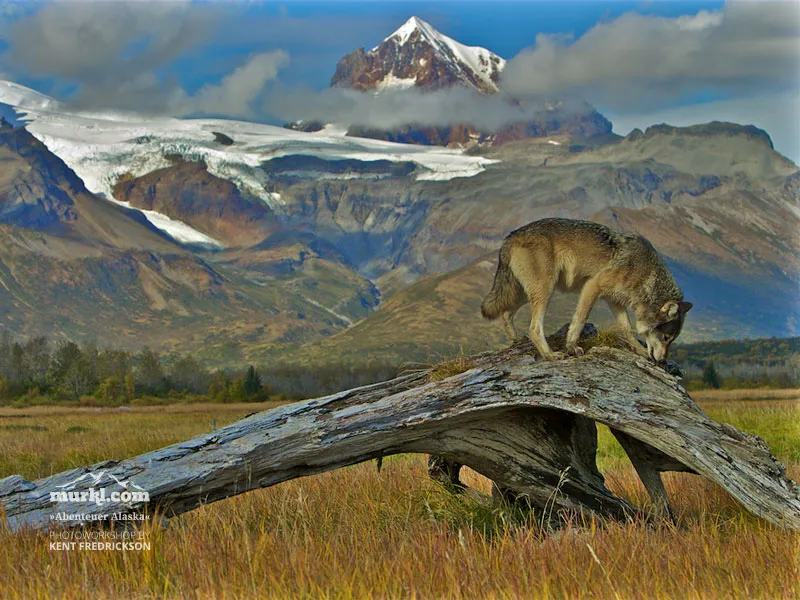
Hallo Bay is the jewel of the Katmai coast. The Hallo Glacier, with its ice- and snow-covered ridge, towering cliffs and sloping meadows, surrounds the bay and provides a stunning backdrop for bears and wolves. In Kent Fredrikson's words: "On my first bear tour in Katmai National Park I took over 1,500 photos in just five days – you can see some of them here: http://coolwildlife.com/grizzly-bear-pictures/. During that time I saw almost every bay on the Katmai coast, but none was as beautiful and perfect as Hallo Bay. I can only recommend bringing plenty of time and a wide-angle lens, so that besides the animals you can also capture the breathtaking scenery."
What does the trip look like around the photo workshop and the camp?
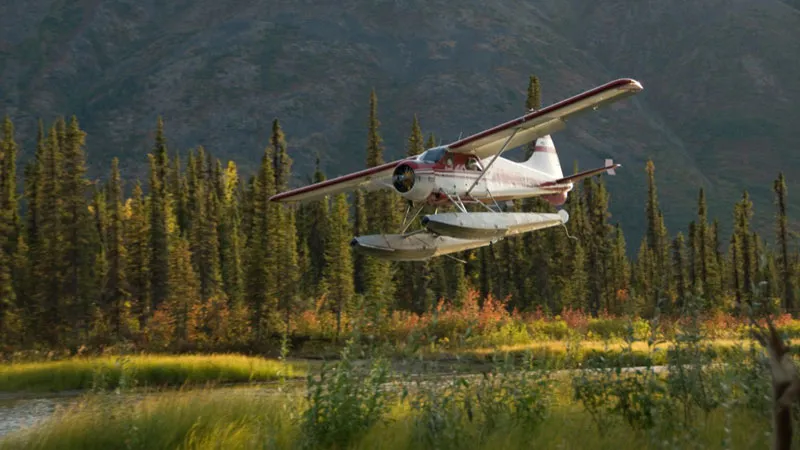
After you land in Anchorage, we'll pick you up at the airport and take you to your first accommodation. We've reserved double rooms for you in a cozy hotel; for an extra charge you can of course have a single room. The rest of the day is yours to explore Alaska's metropolis. Anchorage is by far the largest city in Alaska and its most important industrial center, especially for oil production, mining and tourism. You can spend your last day and evening in civilization before moving on with sightseeing and leisurely walks through the city. We at murkl.com are happy to give you tips for fun things to do. The next morning you'll fly on with your group in a smaller plane to Kodiak. From there, a classic floatplane takes you to Katmai National Park. The flight alone is wonderful and already a little adventure: you fly over gorgeous landscapes of mountain ranges, rivers and deep valleys – and you'll get your first view of the Hallo Bay ice fields from above. With a little luck you might even see humpback whales in the sea or moose on land, so even here: eyes open and camera ready!
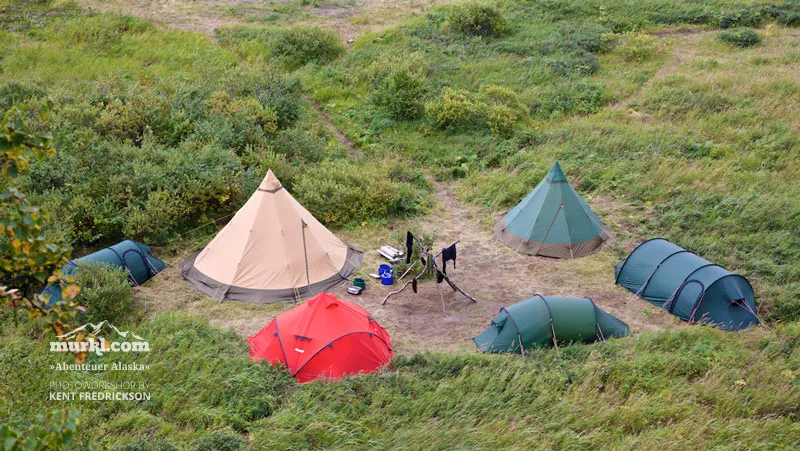
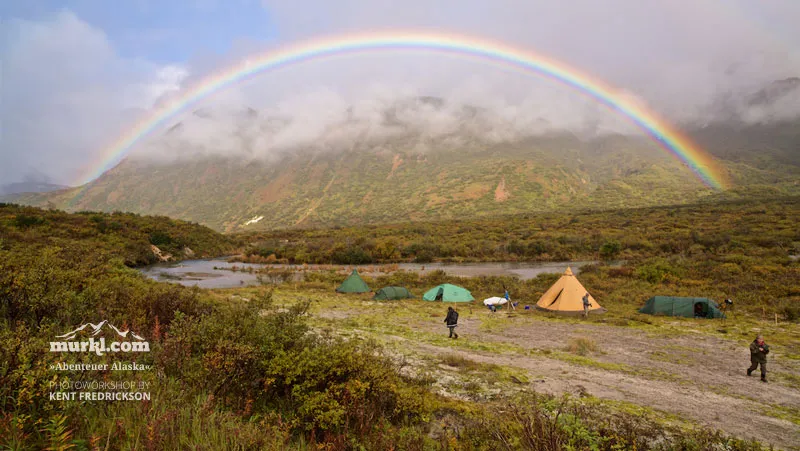
Once you've landed at Hallo Bay, you'll hike to the camp. It's the same camp the BBC film crew and other wildlife film teams use as their base. Large fences around it keep everyone inside safe. Each of you gets your own all-weather tent with a small vestibule. There are also two larger communal tents used for joint planning, talking shop and, of course, shared meals.

From here you'll set out on your excursions during the photo workshop, which are described in more detail in the next section.
On the tenth and final day, a bush plane takes you back to Kodiak – time for a few last shots of the amazing landscape from above. In your luggage you'll carry a rich haul of photos and footage of unforgettable wildlife encounters and landscapes, plus lots of new experience and knowledge of nature and wildlife photography. After the flight back to Anchorage, civilization has you back. One last night in the same hotel as on the first night of your trip – and then, far too soon, it's time to head home.

How exactly does the photo workshop in Katmai National Park work?
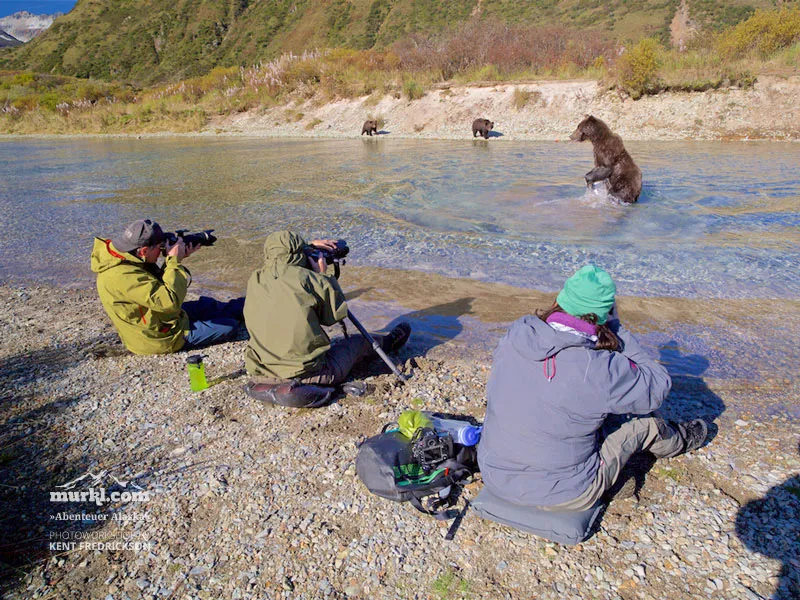
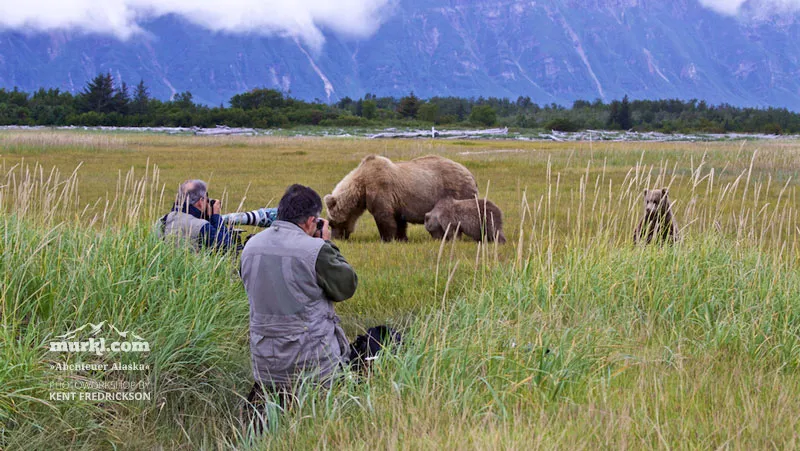
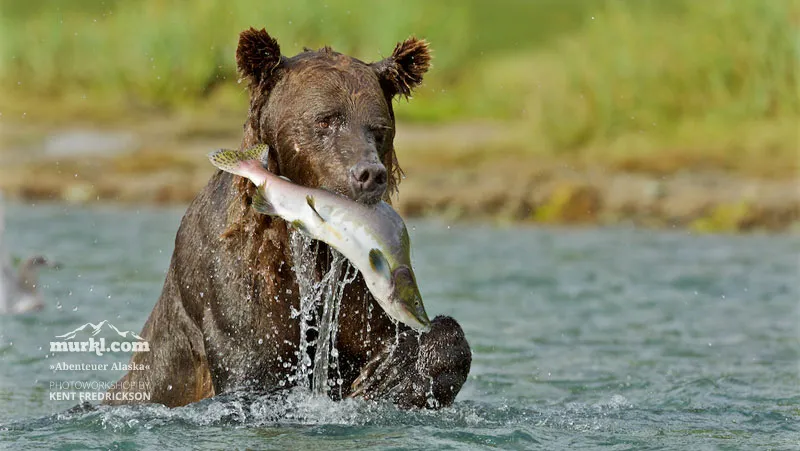
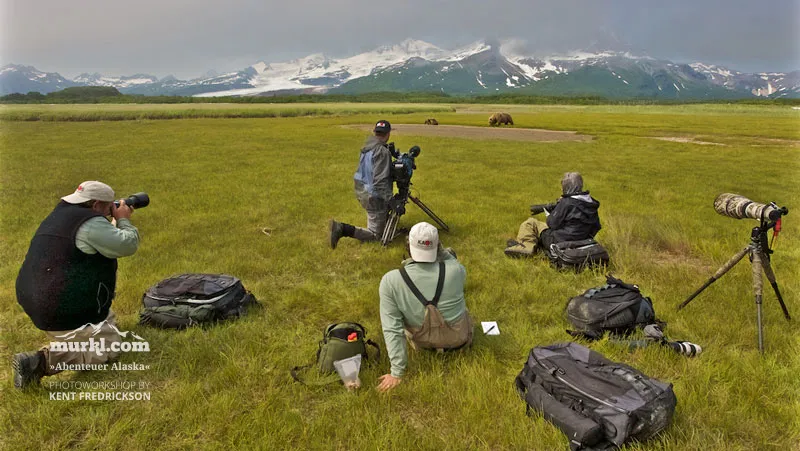
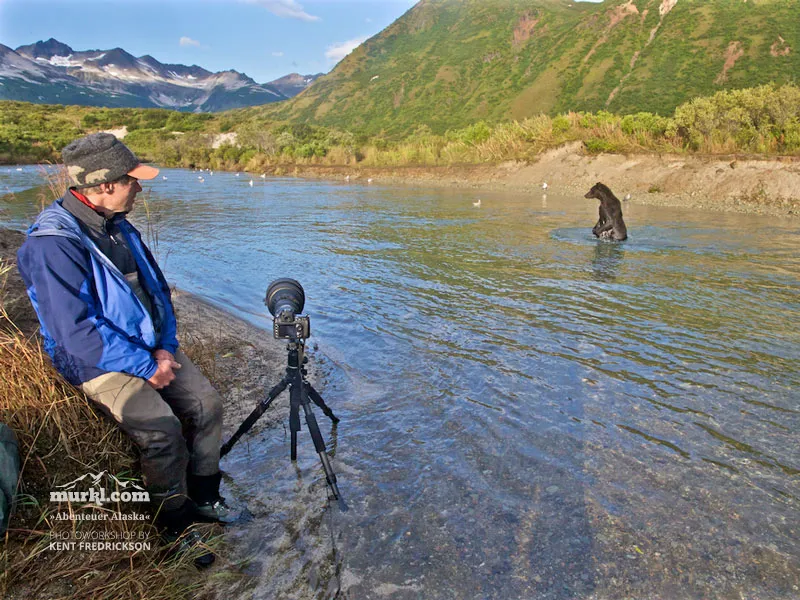
The best photo spots are about three kilometers (2 mi) from the camp at Hallo Bay. Since you'll cover this distance once or twice a day, you should bring a bit of stamina. The best photo locations stretch along the middle river, where the silver salmon swim upstream. At low tide, the river mouth attracts predators looking for crabs and other sea creatures. Between the tides, the pools in front are ideal feeding spots for bears and wolves – and therefore the best place for us to watch and photograph them and their families. And when the tide comes in, even more salmon arrive – not only the bears know that, but luckily so do we. The wolf pack often watches the bears from Nursery Hill as they hunt the seals driven by the tides into the shallows of the river at dusk.
Your two guides, Buck Wilde and Kent Fredrikson, set the routes and tours. They're always close by, explaining, helping and protecting. And they give you the crucial tips when it comes to taking the photo of the year.

What is the photographic highlight in Katmai National Park?
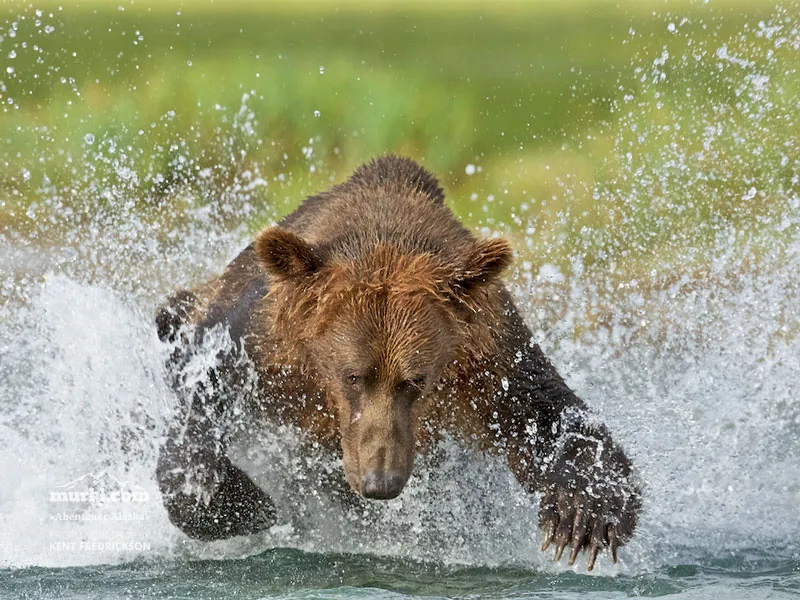
Very close by there's another meeting place for the animals. We'll only go there, however, if no wolves show up, because we definitely want to avoid disturbing them. The thing is: there's always something for the animals to hunt. And that makes for breathtaking shots with splashing water and lots of action. The greatest photographic success would be capturing a wolf and a grizzly with a salmon in its mouth together in one picture. Of course we can't promise such a photo, but with Buck and Kent as your guides, the odds aren't bad.
How close will we get to the bears?
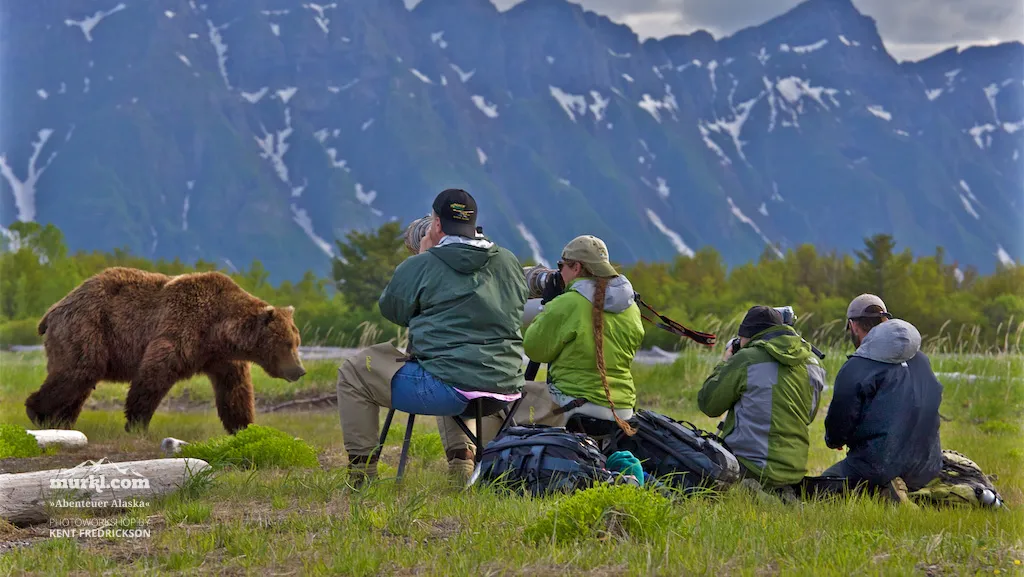
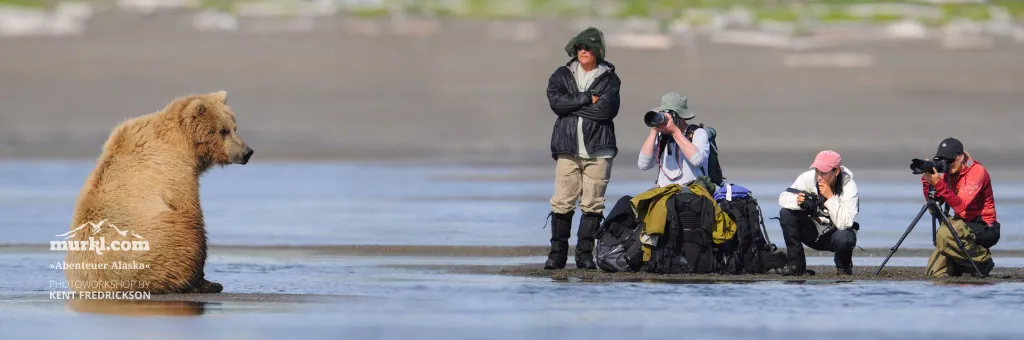
Sometimes very close. But this question is probably best answered by Kent Fredrikson, from his personal experience working with behavioral researcher Buck Wilde:
"In 2012 I accompanied Buck on a wildlife shoot in Katmai National Park. On the second day we found ourselves only about three meters (10 ft) from a male grizzly weighing around 350 kilograms (770 lb). I had a 70–200 millimeter telephoto lens on my camera body, so annoyingly I could only photograph the animal's head, which already filled the entire frame – crazy, the whole thing. Buck had told us beforehand that he would take charge if a bear came too close. I remember it as if it were yesterday. Buck stepped in front of the group, calmly but firmly held out his arm and said that this distance was now enough – for us and for the bear. The bear seemed to understand and calmly moved a few meters away to keep grazing in peace, as if we weren't even there. My heart was pounding like crazy. But Buck reassured me and told me he'd had hundreds of encounters like this and had never been in danger. Bears had never come closer to him than two or three meters."
In the following video you can see how calmly Buck handles such rather rare situations. Here he is "talking" with "Van", the largest bear in Katmai National Park. Source: scene from the BBC documentary "The Great Bear Stakeout" (German title: "Unter Grizzlys", from the BBC Earth series).

What’s included
Included:
- 2 nights in Anchorage at the start and end of the trip
- Round-trip flight from Anchorage to Kodiak
- Round-trip flight by propeller plane from Kodiak to the camp in Katmai National Park
- Photo workshop with BBC photographers Buck Wilde and Kent Fredrikson
- On-site guidance by the guides (Buck Wilde and Kent Fredrikson)
- Accommodation in the camp at Hallo Bay
- Meals in the camp
- National park fee
Not included:
- International flights to/from Kodiak
- ESTA (US travel authorization)
Pictures
Request
Free and without obligation. We will get back to you within a few days.